
BUILD
Reclaiming Market Urbanism in the Prairie State


“It’s not breaking news to anyone that Illinois needs more housing” Governor JB Pritzker announced at recent gathering with the City Club. The room erupted in applause. On Friday April 17th the Governor and group of local housing experts held a panel centered on our Governor’s latest proposal centered on housing in the state of Illinois. Noting that Illinois has seen a drop in active real estate listings, dropping 65% over the past 5 years, he estimated our state is currently short nearly 225,000 units of housing. It’s easy being in Chicago to get caught up in the local supply issues we face here, something I myself am guilty of. However to Pritzker’s credit he emphasized that this problem is not just endemic to Chicago. As companies like Rivian have scaled up manufacturing operations in places like Bloomington there are stories emerging of Factory Workers who are commuting in from 90 miles away because of the lack of supply. Rockford has been ranked prominently in recent lists ranking the hottest housing markets in the country. Something that still sounds unbelievable, but real estate transactions remain extremely competitive.
In our Governors own words ‘We do not have an overbuilding problem, we have an under production problem’. Listening to Pritzker’s proposed solution to the housing problem in Illinois you’d be forgiven for thinking you were listening to a 1980’s radical free market style Reagan Republican, a joke the governor even made at his own expense. His emphasis was that housing supply issues are best solved by the private market, and that it’s time for state and municipal governments to get out of the way. The bill itself is rather ambitious. It attacks supply constriction from many different angles. From legalizing a number of missing middle housing types by right. 2-flats, 4-flats and 6-flats to 8 whole units, allowed by right on a scale tied to lot sizes. In Chicago alone we have over 14,000 vacant lots that are zoned such that currently only single family homes could be built. (Given the historic density of many of these neighborhoods this is frankly ridiculous.) Streamlining plan review processes, setting deadlines that municipalities must complete reviews by. Eliminating excess fees on any plan that could be built by right under the new code. (Cynically much of the minutia reads to me as forcing municipal governments to…actually do their jobs and clear plans instead of sitting on them). Lessening parking requirements. Meaning single family homes only must require one space, and many apartment buildings would only need 0.5/unit, to eliminating them entirely for assisted living communities, non residential buildings being converted to housing (Chuch condos, lofts, etc) or to instead allow ground floor commercial spaces. It isn’t just land use and the permitting process. The BUILD bill will allow single stair buildings up to 6 stories tall. Which is something I think is hard for many people to understand, but if you’ve been in an apartment building from WWII (which tend to be dearly beloved for their often better floor-plans and larger apartments), then you have been in one. Allowing builders to get away from double loaded corridor designs that currently dominate multi-family construction. Meaning developers would have room to experiment with floorpans and maybe even get back to building the types of units I lamented that we no longer build in my post, The Apartment Problem. The below image has become a bit of a standard primer for ‘showing’ what this looks like and remains the standard for this discussion. (If anybody knows the source so I can credit please let me know!)
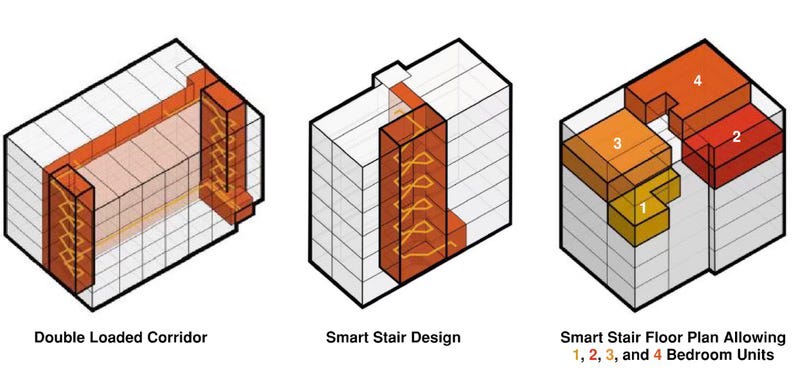
Allowing ADU’s by right was something we recently passed in Chicago, allowing coach houses, basement apartments, etc. Unfortunately for Chicago a poison pill was added to that bill, requiring union labor to construct. Something that to be clear, labor unions do not really build. Labor unions in Chicago primarily focus on larger jobs, ie 5 over 1’s, skyscrapers and other large development sites. The Governors plan removes this requirement and expands the legalization of ADU’s to the state. One of the panel members noted that she herself built a small house for her own mother in her backyard in Bloomington, allowing a multi generational living for her own home that today requires jumping through hoops. The last bit of the bill aims to cap impact fees. Which add additional burden to getting many developments off the ground and wind up adding to costs of construction before building ever starts.
It’s a big bill, it does a lot but in many ways simply rolls back the clock to a time when we built things far more easily in this country. A theme that continually came up was an emphasis on ‘gentle density’. Urban development in America has gotten a bad reputation over recent years. When most Americans hear ‘development’ one of two images pops into their head. A ‘Texas Donut’ style 5 over 1 or a towering high-rise. That isn’t really what BUILD is legalizing. The images below show the type of neighborhood made legal once again. Made of smaller fine grained residential buildings that today we aren’t able to build today due to excess regulation. The form that make up many a beloved neighborhood, consisting of (family sized) 2-6 unit buildings and the occasional larger building intermixed with smaller units.
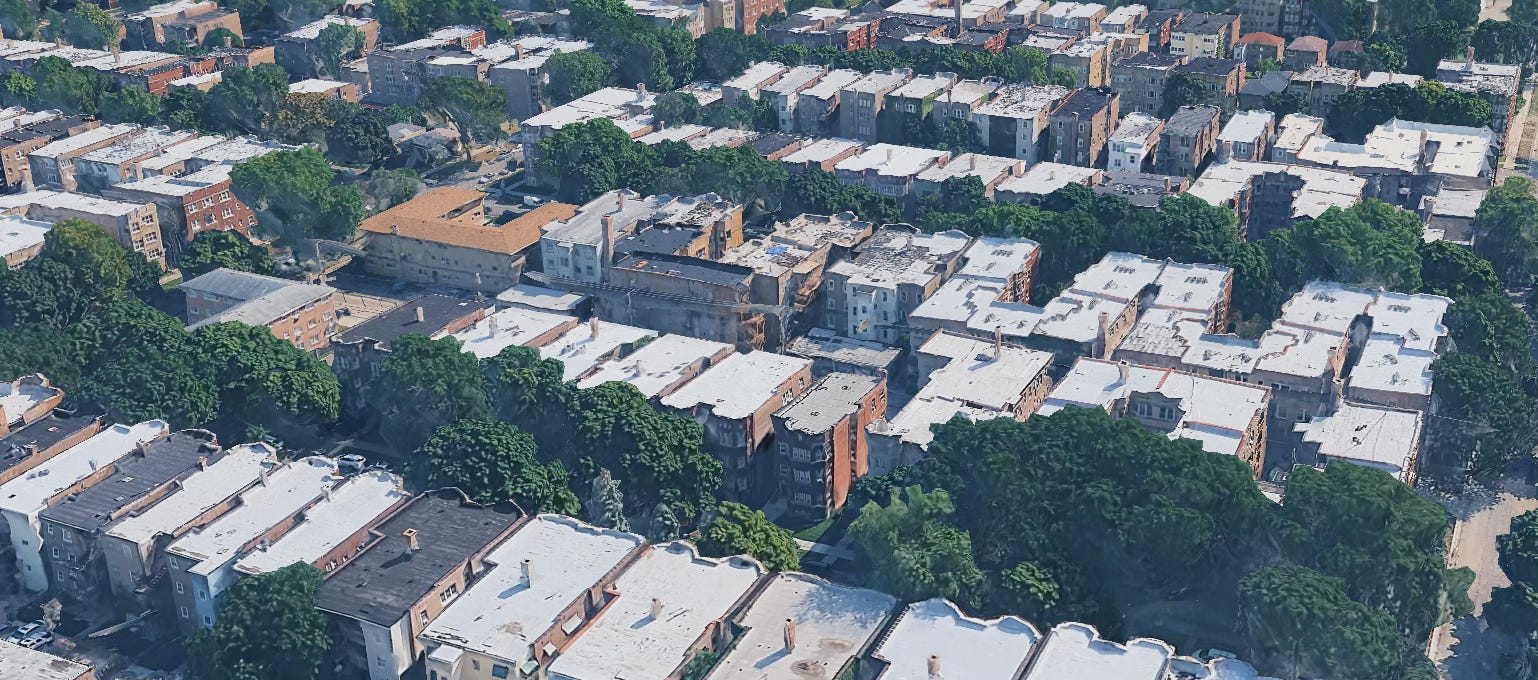
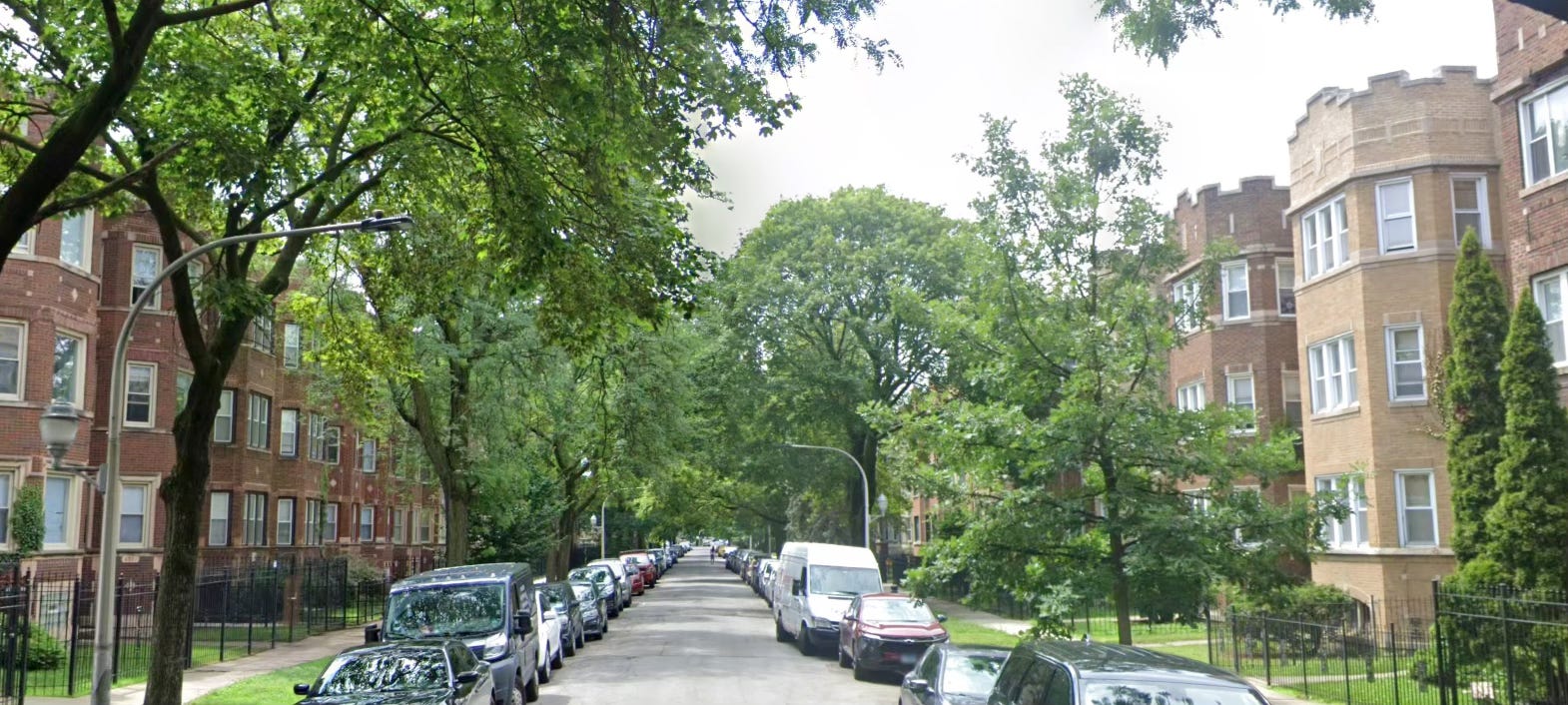
That hasn’t stopped the fear mongering mind you. And social media like twitter “X.com” have been rife with posts like this.
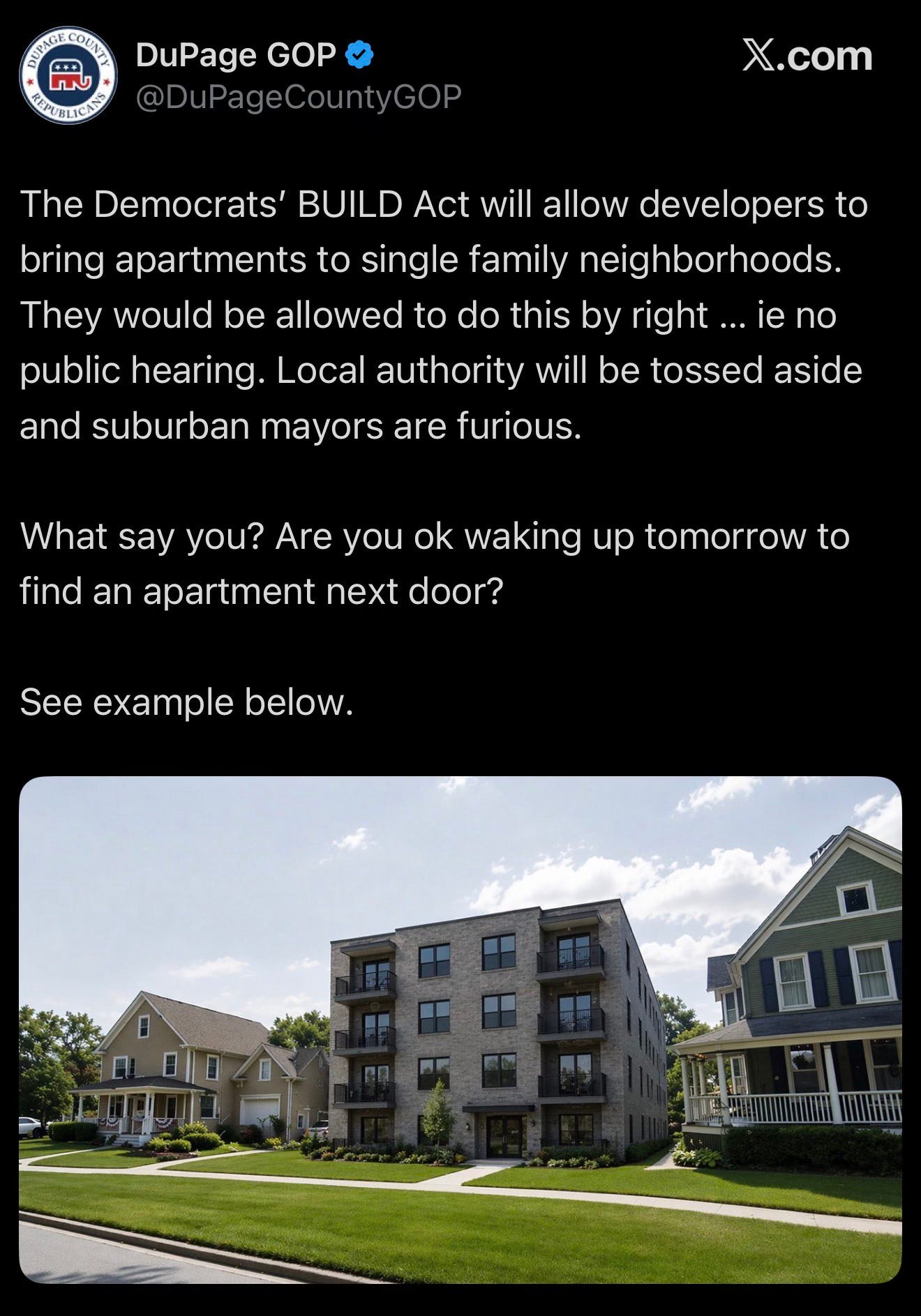
This is…what appears to an AI generated image of an apartment building plopped into a single family neighborhood. To start, AI does not really understand scale and the apartment building it generated is at 1/2 the scale of the houses next to it. It appears to be an at minimum 8 but more likely 16-20 unit building. Eye-balling it and being generous this lot likely falls between that 2.5K square foot and 5K square foot ballpark. Meaning under the BUILD bill you could likely build up to a 4-unit building. We don’t have to imagine what this looks like. This is how Chicago was built, and the below image shows us what a 4-unit single stair building looks like when it’s built in a single family home neighborhood.
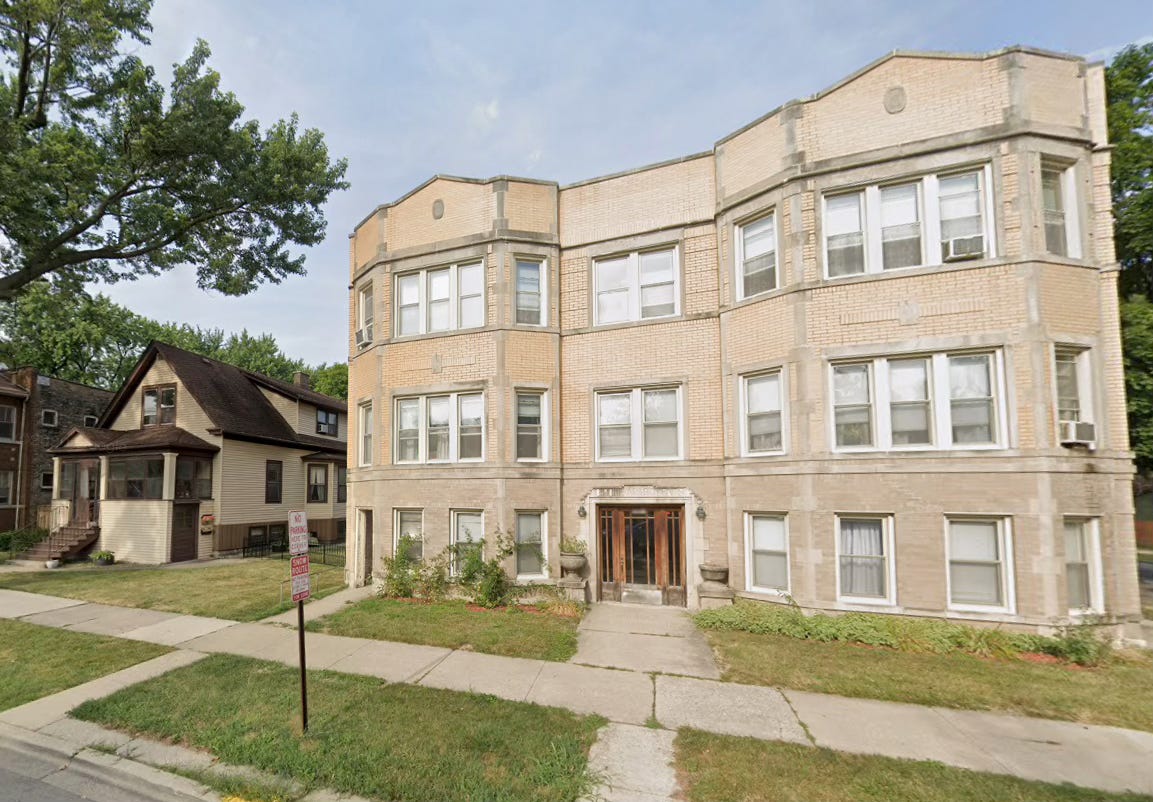
Most of the urban fabric of Illinois was built out by incrementally adding density. Towns and cities aren’t meant to be in stasis forever. Change is a fundamental part of economic dynamism. The fear mongering around apartment buildings in culdesac suburbia isn’t a fear I take particularly seriously. You may see more small scale apartment buildings popping up nearer the downtowns of our many railroad suburbs, but I can’t envision any developer making a 4-flat in a McMansion neighborhood pencil. Whipping up fear about things that are economically unfeasible is fun for social media engagement I’m sure, but has very little to do with the bill.
Getting back to what this bill may actually mean. Illinois current housing problem is about more than Chicago and its suburbs, this is a state wide initiative and despite what many think, Chicago is not the only urban area in Illinois. Below is an aerial from Springfield Illinois. Showing the land use around Frank Lloyd Wright’s Dana-Thomas House.
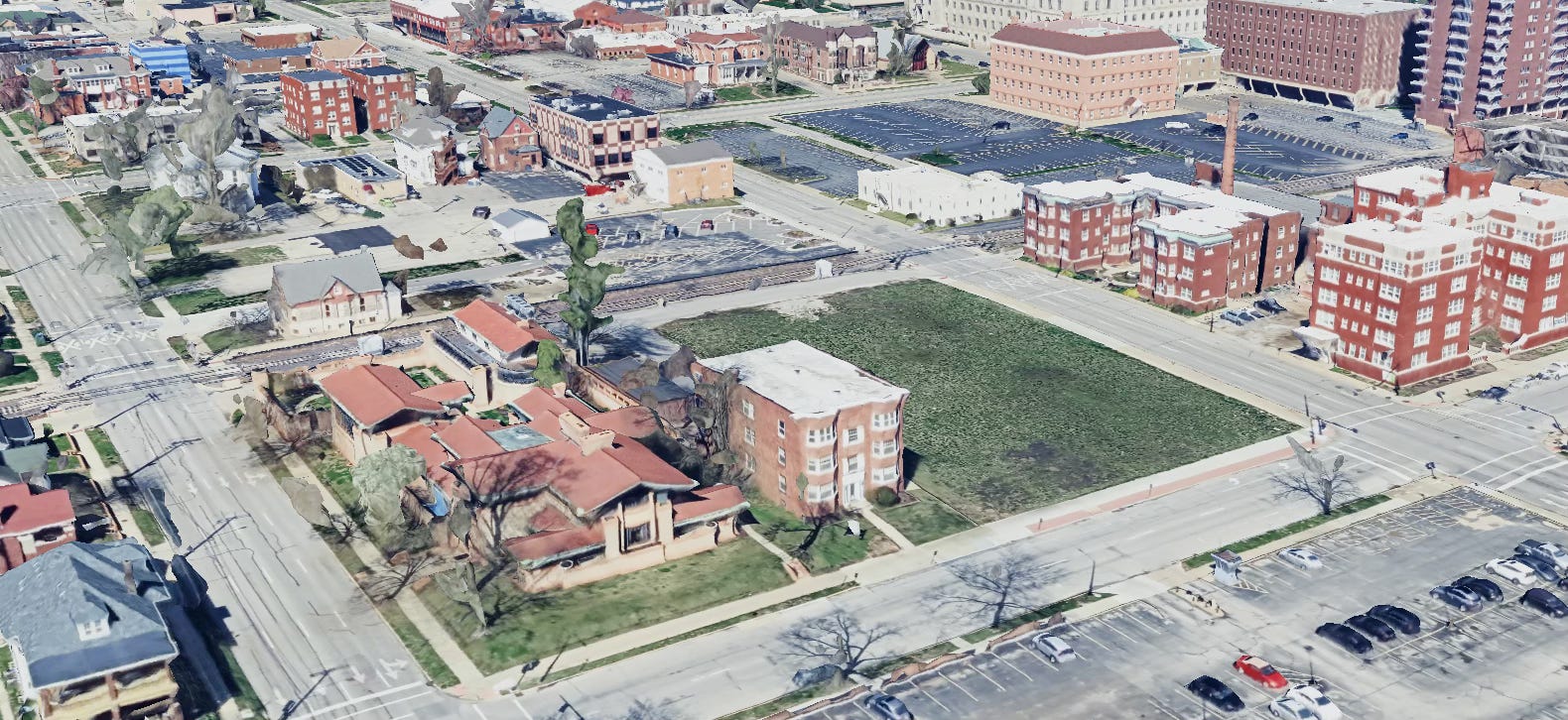
The parking lots and vacant land are a hold over from the urban renewal era, when we demolished large parts of cities citing blight and or needs for parking. What you’ll notice is standing around this historic Prairie Style Masterpiece are….apartments. Small fine grained apartment buildings that currently would not be allowed. A single stair 6-unit building is directly next door, a duplex is across the street, and across the vacant land is a courtyard style walk up apartment building. Say what you will about the state of Downtown Springfield, but much of it’s problems could very well be solved by simply adding residents and making it legal to do so in the same way we did in the past. By simply building good housing.
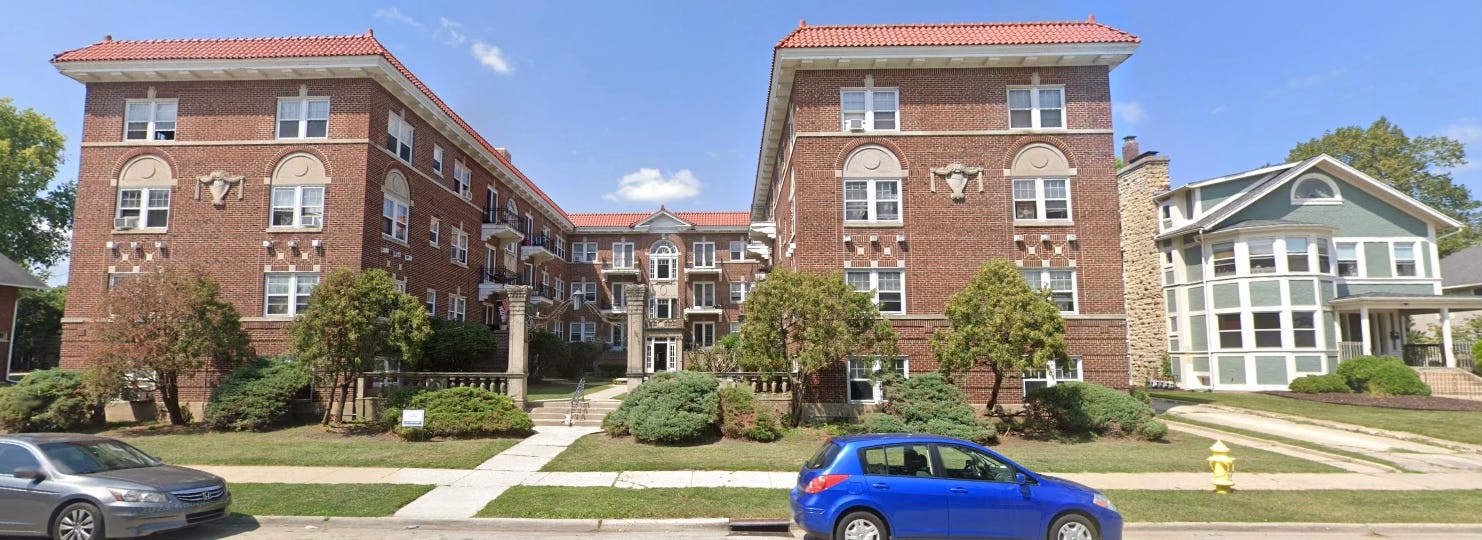
The 1920’s courtyard style building below, which is built on a street of single family homes and other large apartment buildings isn’t in Chicagoland. It’s in Rockford Illinois.
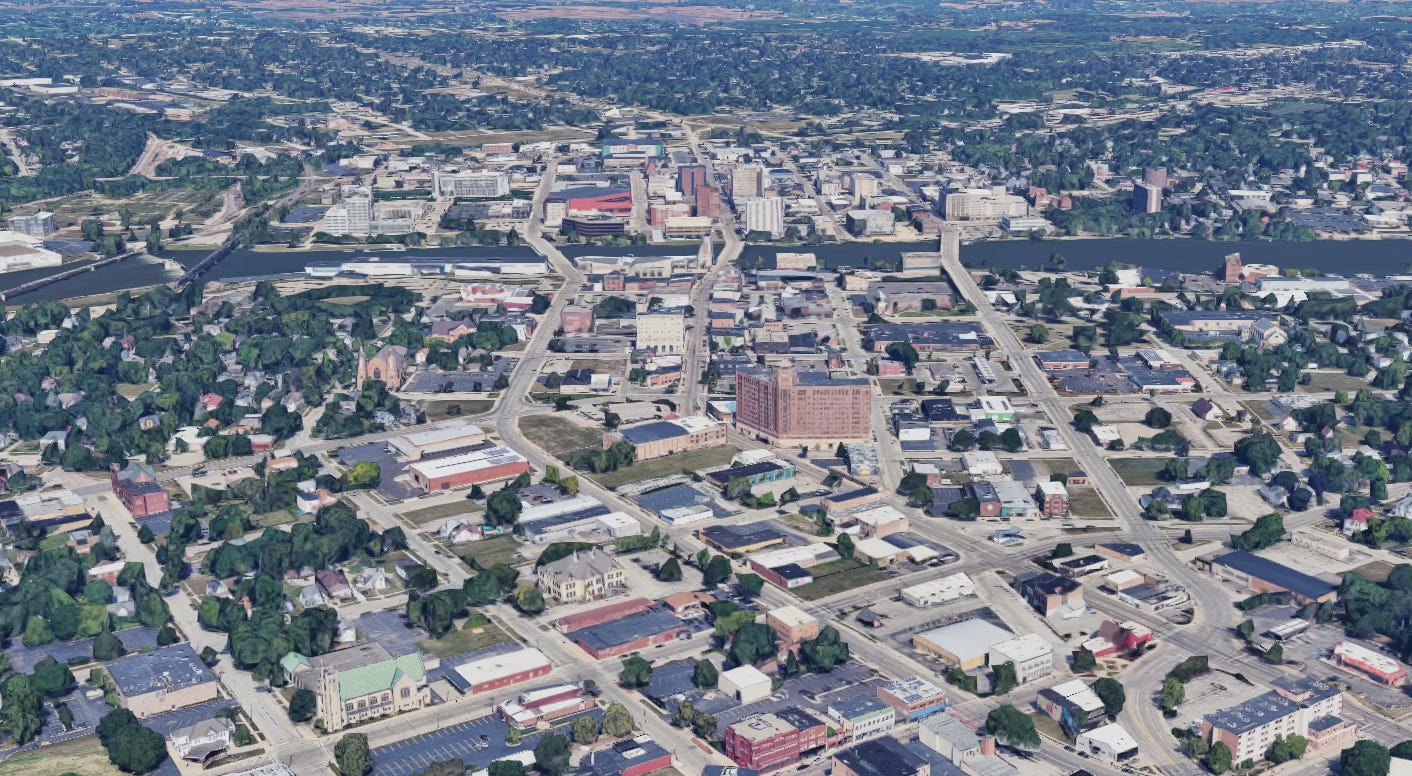
Looking at an overhead of Rockford Illinois, one of the hottest housing markets in the nation, you’ll notice how much vacant land there is downtown. BUILD will legalize a far greater building typology than is currently allowed and could potentially undo much of the damage to the urban fabric it’s endured over the past half century. Filling this in with mixed use buildings and smaller 2-6 unit buildings could be a boon not just to the city’s downtown but to new and existing residents who would live in said buildings. Adding residents, customers for existing businesses and spurring additional economic development in what was once, and can be again, the economic core of a region.
A similar dynamic plays out in Bloomington, where we older have 6-unit buildings adjacent to downtown surrounded by empty lots and parking lots. Lots that it probably wouldn’t make sense to develop as single family homes but are ripe for buildings that are similar to themselves.
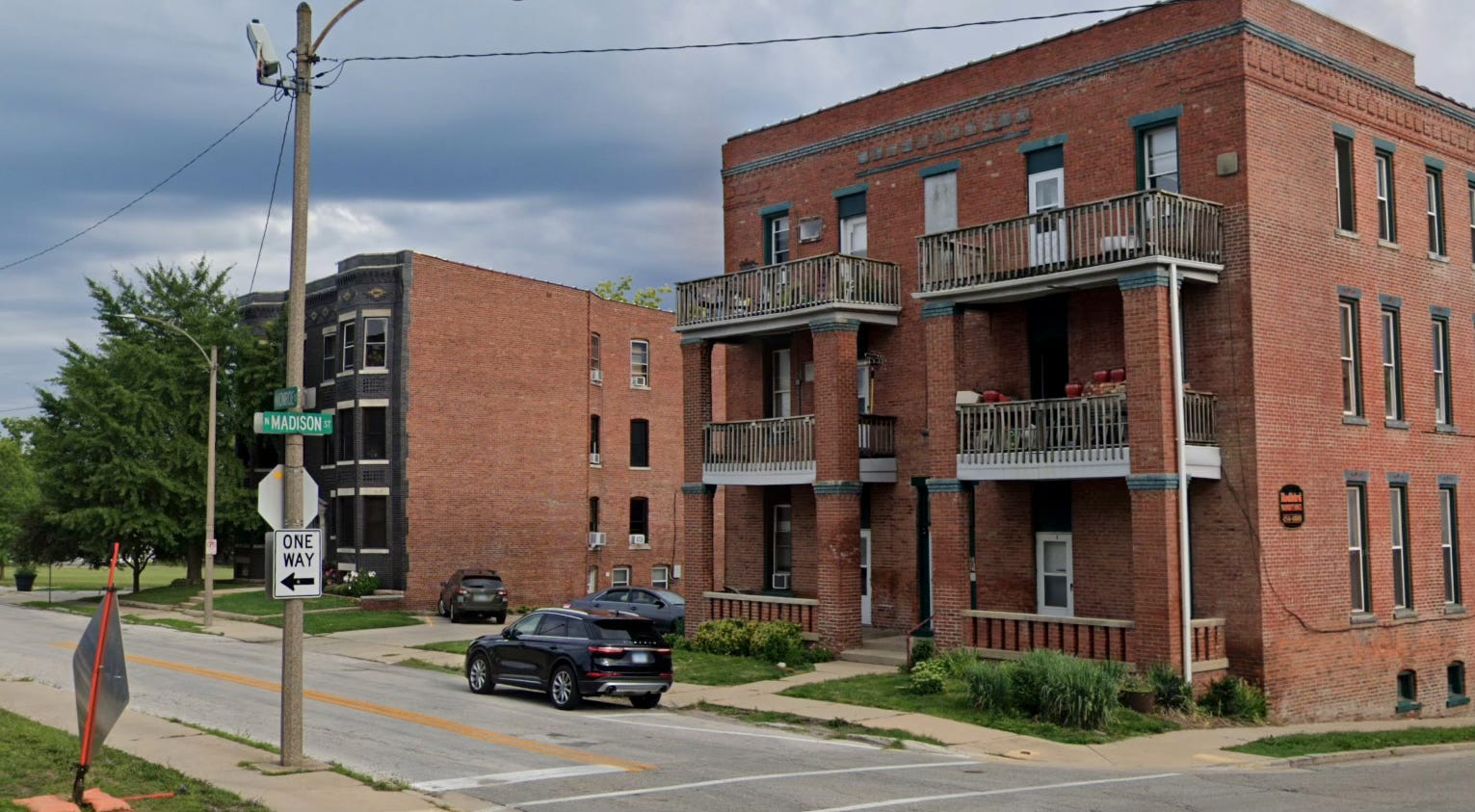
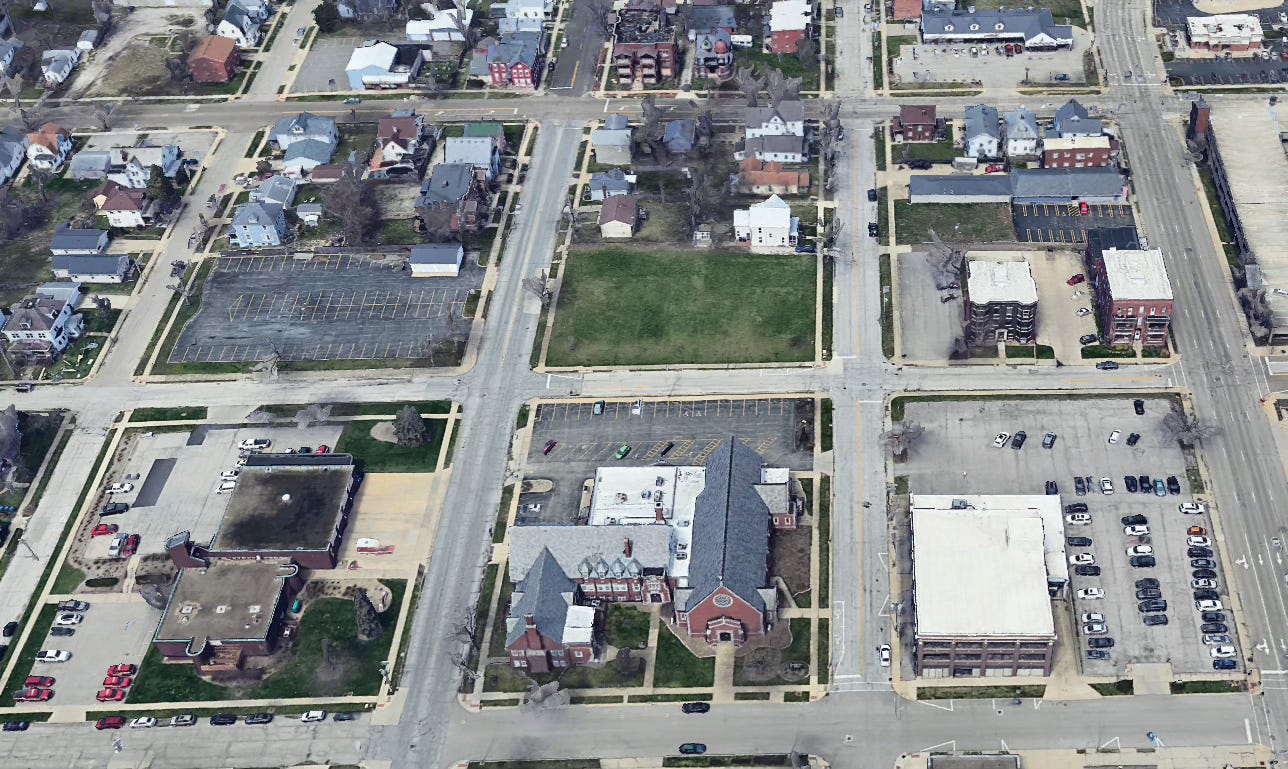
This is a dynamic that plays out across metros across the state, and even many beloved small towns. Apartments exist outside of Chicago despite what many suburbanites might believe.
Going back up to Chicago (sorry) you can see how single family zoning has had detrimental effects in neighborhoods that are bouncing back from the urban renewal era. 63rd street in Woodlawn is a great example. Back in the first half of the 20th century this was one of the cities ‘bright lights districts’, and was one of the busiest commercial corridors in the city. Anchored by the green line it was a hub of commercial activity, shopping, dining and nightlife. Predatory landlords, fraudulent insurance schemes (landlords burning their own buildings for the payouts) and general disinvestment wreaked havoc on this corridor. That decline caused a domino effect, depopulation, lowered economic circumstances, extreme loss of the built environment and crime were all compounding issues that resulted in further hollowing out over the past half century. Most of the former mixed use buildings and larger apartment buildings on the side streets around them were completely erased in a vicious compounding cycle. Leaving vacant lots where once before existed a vibrant urban fabric. Today we’re starting to see positive signs, as new mixed used developments cropping up.
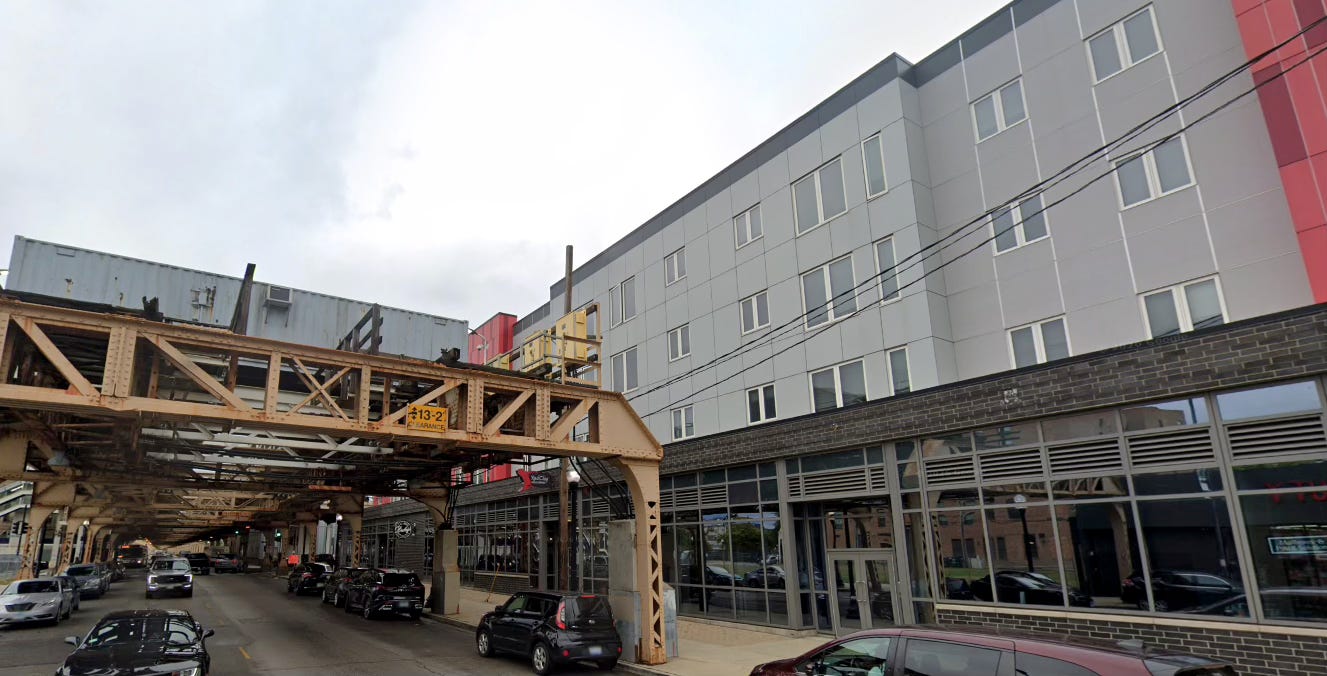
A mile down the road shows a different story. The green line once extended all the way down here and beyond, right up to Jackson Park. Until the 90’s when a nearby church lobbied for the removal of these tracks, citing blight and crime, and they had their own vision for redevelopment. Involving single family homes. Pictured below.
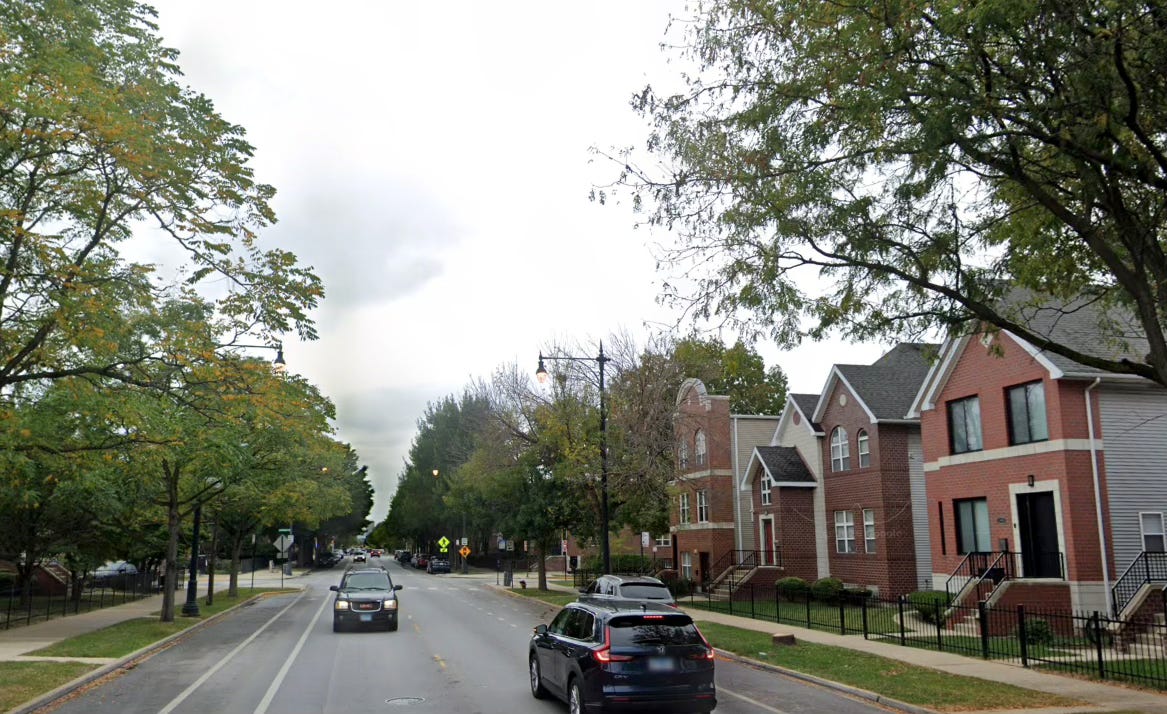
For comparison, this is what this block once looked like.
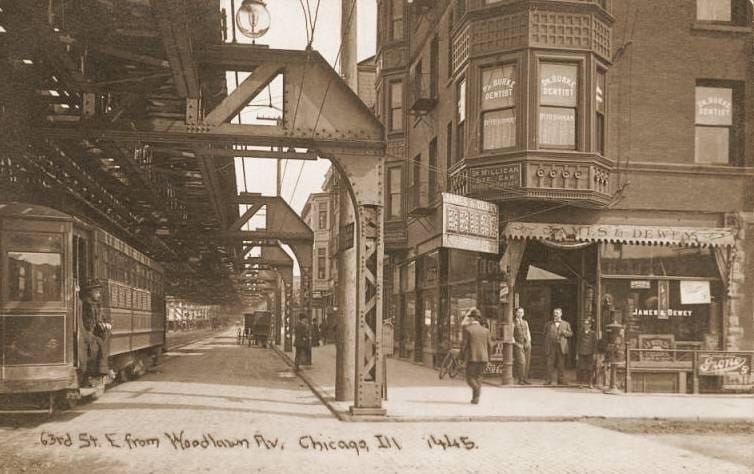
What was once a vibrant mixed use commercial street with rapid transit was replaced with a comparably suburban street. And you can see this in Woodlawns population numbers. A neighborhood once home to 80,000 now hovers around 24,000 residents. Today it is seeing redevelopment, with new build single family homes popping up on side streets fetching $800,000. Price points well above the neighborhood median income. Relaxing some of our rules, from zoning, to permitting and even building typology is a tool we have to both grow depopulated neighborhoods, and expand housing supply in a way that diversifies housing stock that will allow growth without massive displacement. If we do nothing, people will continue to build whatever is allowable. A single stair condo building that could house 8 families (A typology that exists throughout the neighborhood in its existing old housing stock) would involve jumping through hoops which could take years. Building a mansion for people priced out of similar housing in nearby Hyde Park? You can break ground on that almost immediately by comparison. We have a choice here, we can keep doing what we’re doing, or we can simply do what we used to do in terms of building. The governors BUILD plan seeks to try that out, and as a Chicagoan watching our existing housing stock skyrocket in price I don’t really see what we have to lose by giving it a try.
The sunbelt has eaten our lunch in terms of housing production over the past 30 years. Their model involves ever expanding single family sprawl, which is fine for many, has attracted many people from northern metros seeking lower housing costs that were provided by their building boom. Single family homes and endless suburbia are not the only way to produce housing. A pro growth mindset and deregulatory environment has worked for them in many respects. The BUILD plan looks to take a decidedly urban approach. I think it might just work.